
You keep saying you’ll spend less time online, but the scroll always wins. Between outrage headlines, productivity hacks, and endless “For You” content, your brain never really gets a break. A short digital detox or even a feed-curation day can reset attention.
Why Infinite (Algorithmic) Feeds Hijack Your Brain
Our brains crave novelty. Social media algorithms crave engagement. That’s a match made in dopamine heaven—and attention burnout. Add sleep deprivation, stress, and a few late-night scroll sessions, and you’ve got the perfect recipe for mental fog. I’m not anti-tech. I just want tech that serves me—not the other way around.
Benefits of a Media Diet
So, does cutting back on social feeds actually help? The research says yes—strongly. Whether it’s a short break or a structured reset, these studies show measurable boosts in mood, body image, and mental clarity.
| Study Type | Key Outcome |
|---|---|
| 7‑day social‑media break (RCT) [1] | Higher well‑being, lower loneliness |
| 2‑week Instagram fast [2] | Improved appearance satisfaction |
| Survey of 32 k adults [3] | 1 in 5 plans a detox yearly |
| TikTok audit [4] | 52 % of top mental‑health clips inaccurate |
Three Levels of Feed Curation
You don’t have to delete every app to feel better. Start small and level up at your own pace:
Level 1 – Unfollow, Mute, Replace
Start here if your feeds feel loud, anxious, or just…pointless.
- Open your top 1–2 social apps. Scroll with intent.
- Unfollow stale accounts, mute doom‑triggers and rage-baiters.
- Replace the noise: follow one uplifting or thought-provoking account.
Level 2 – Guardrails & Focus Windows: Social-Media Detox Lite
Ready to stop social from hijacking your day? Time to add structure.
- Set a daily cap with Screen Time (iOS), Digital Wellbeing (Android), or StayFocusd (Chrome).
- Install feed blockers like News Feed Eradicator, Unhook, or DistractOff.
- Block off a “no-feed zone” from 7–10 a.m.—protect your brain’s prime time.
Level 3 – Full Digital Fast
When your mind feels fried, or you’re in a high-stress cycle, go deep.
- Temporarily delete social apps or log out across all devices.
- Pre-load articles, newsletters, or podcasts for offline downtime.
- Research shows even one 24-hour fast can lower cortisol and reset content cravings.
Building a Sustainable “Information Plate”
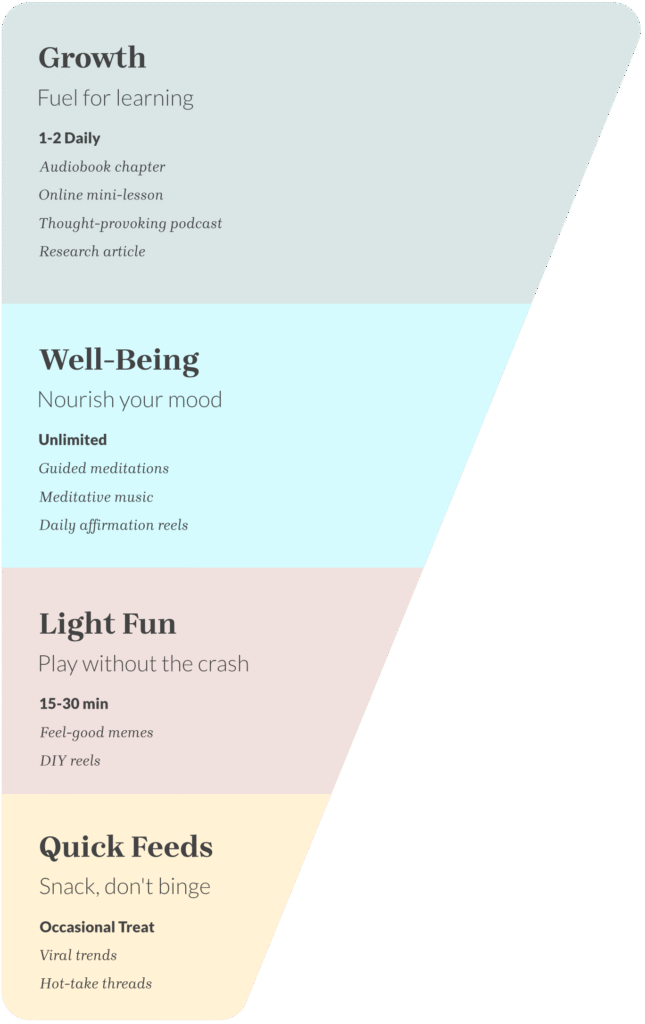
Cutting back is one thing. But what do you actually feed your brain once the noise is gone? Think of it like nutrition: not everything you read or watch needs to be a “superfood,” but balance matters. Here’s how to think about curating content like you’d plan a healthy meal:
| Plate Section | Examples | Daily Portion |
|---|---|---|
| Protein (growth) | Research articles, audiobook chapter | 1‑2 daily |
| Veggies (well‑being) | Daily affirmations, meditation music | Unlimited |
| Carbs (light fun) | Memes, DIY reels | 15-30 min |
| Dessert (quick feeds) | Viral trends | Occasional treat |
Toolkit: Apps, Extensions & Minimalist Devices
If you’re experimenting with screen limits or focus tools, there are plenty of options out there—everything from browser extensions to distraction-free phones. The News Feed Eradicator chrome extension has over 2M installs and replaces your feeds with an inspiring quote. It’s highly ranked as one of the best apps to stop doomscrolling. There are also a number of simple device tweaks that can help.
The key isn’t which tool you use—it’s whether it makes your digital environment feel calmer, clearer, and easier to manage.
Final Thoughts
Curating feeds isn’t about quitting the internet; it’s about designing an information environment that supports calm, focus, and honest learning. Try Level 1 unfollows today, then build up. Your brain—just like your body—thrives on a balanced diet. Start with a small edit to your feed today, and build from there.
Source Notes
- Social‑media restriction improves well‑being (RCT) — ScienceDirect
- Two‑week Instagram break boosts body image — ScienceDirect
- One in five consumers plan annual detox — GWI
- TikTok mental‑health content accuracy audit — The Guardian